The Wolfe Wave pattern predicts big reversals, but manual trading makes it brutal. Find out how to catch every valid setup without the guesswork.
Table of Contents
1. What is the Wolfe Wave pattern?
The Wolfe Wave pattern is one of the most reliable and high-probability reversal setups in trading. It identifies potential trend reversals by spotting specific wave formations that predict where price is likely to turn. Traders have long relied on the Wolfe Wave pattern for its accuracy in spotting market turns and potential profits.
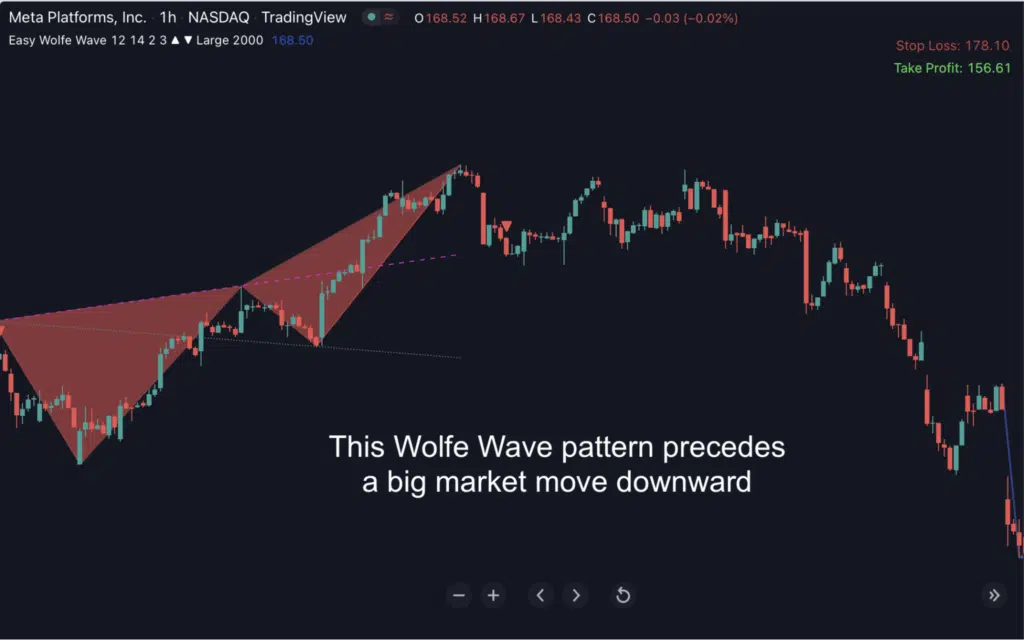
What makes the pattern stand out from other reversal setups is its structure. It consists of five waves where supply and demand are in a natural battle, creating a predictable equilibrium price that the market is drawn toward. When the pattern completes, price tends to move swiftly and decisively toward that target, giving traders who spot it early a significant edge.
But here’s the problem: manually identifying a valid Wolfe Wave pattern on every chart, every day is time-consuming, subjective, and easy to get wrong.
2. Why the Wolfe Wave pattern is so hard to trade manually
The Wolfe Wave pattern has a reputation for accuracy, but also for being notoriously difficult to identify correctly in real time. Most traders who attempt to trade it manually run into the same wall:
#1 The structure is strict, and easy to get wrong
A valid Wolfe Wave pattern requires five specific pivot points, each meeting precise criteria relative to the others. Miss one, mislabel a swing high or low, and the entire pattern is invalid.
#2 Every market and timeframe looks different
The pattern doesn’t look the same on a 5-minute chart as it does on a daily chart. Scaling, wave proportions, and breakout behavior all vary.
#3 The confirmation step is easy to skip
The setup only becomes valid after a confirmed breakout, but many traders jump in early, hoping to get a better entry, only to get caught in a fakeout reversal.
These burdens are exactly why most traders either give up on the Wolfe Wave pattern entirely, or trade it inconsistently.
There’s a better way.
3. Trade the Wolfe Wave pattern smarter and automatically
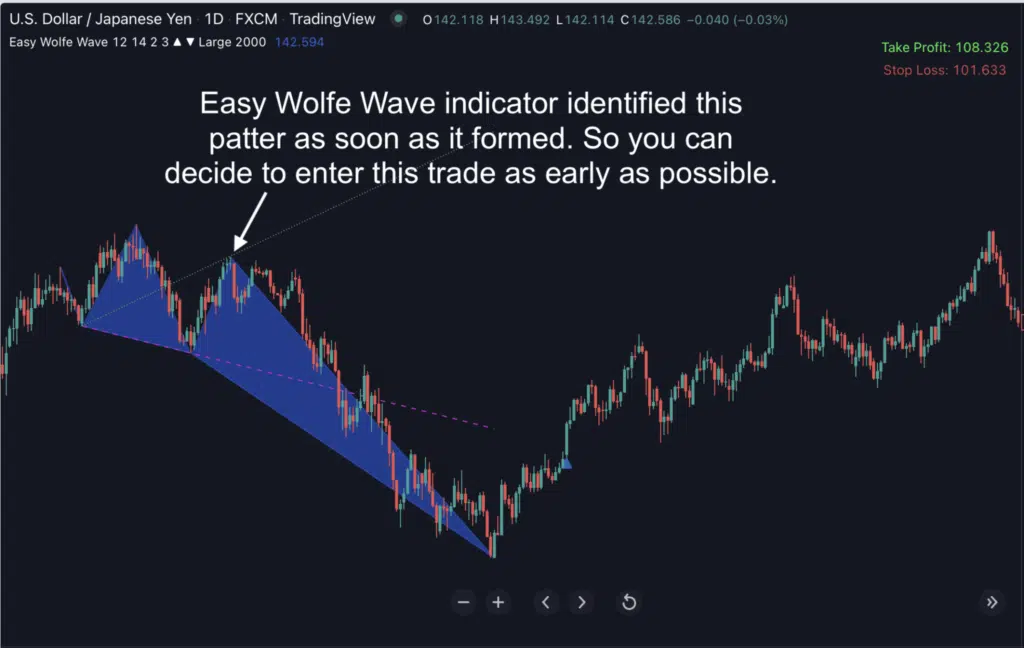
Now, you don’t have to worry about missing high-probability Wolfe Wave pattern setups. The Easy Wolfe Wave Indicator automatically detects and confirms Wolfe Wave patterns across any timeframe and market, giving you the edge you need to enter trades at the most opportune moments.
Here’s a brief of its features:
- Spot high-probability Wolfe Wave pattern reversals with way less effort. The indicator does the hard work, so you don’t have to.
- Avoid frustrating false signals. It confirms patterns, so you get clearer, more reliable setups.
- Find Wolfe Wave pattern opportunities on any market, any timeframe.
- Get instant alerts when a solid setup appears, so you never miss a confirmed move.
IndicatorVault built this to take the guesswork out of finding Wolfe Wave patterns, which are known for predicting big reversals. Instead of spending hours on charts, Easy Wolfe Wave does the heavy lifting, giving you genuine setups and a better win rate.
4. From Pattern Detection to Profit: How to Trade with the Easy Wolfe Wave Indicator
4.1 How the Easy Wolfe Wave indicator detects and confirms the pattern
Step 1: The indicator continuously scans your chart for the five pivot points that define a valid Wolfe Wave pattern. It checks each pivot against strict structural rules: wave proportions, symmetry, and timing.
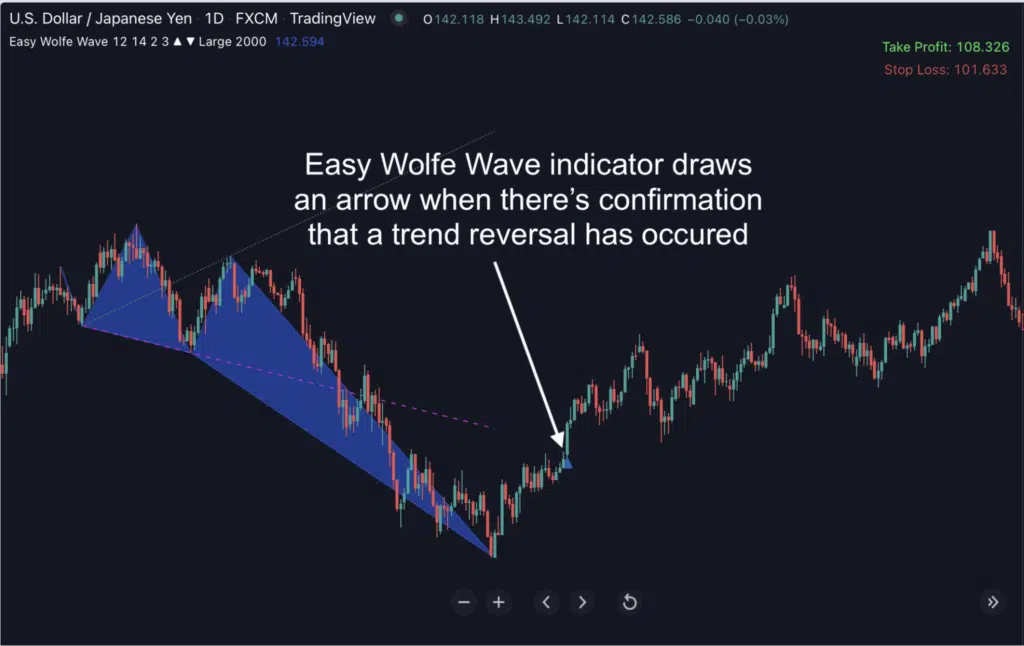
Step 2: Once all five points are identified, the indicator draws the pattern directly on your chart, including the EPA line (Estimated Price at Arrival) – the projected target where price is expected to reach once the reversal completes. This gives you a clear picture of both the setup and the potential reward before you even enter the trade.
Step 3: The indicator doesn’t signal an entry the moment the fifth wave forms. Instead, it waits for a confirmed breakout beyond the pattern boundary, or the line mentioned earlier. Only when price breaks out with conviction does the indicator print an entry arrow on your chart and trigger an alert.
4.2 Tips to trade the Wolfe Wave pattern
Once the indicator is on your chart, here’s exactly how to trade it:
#1 Wait for the entry arrow
Let the indicator find the pattern, and don’t enter early. Wait for the indicator to print an entry arrow. This confirms the breakout has occurred and the Wolfe Wave pattern is active. This is the moment the trade becomes valid.
#2 Target the EPA line
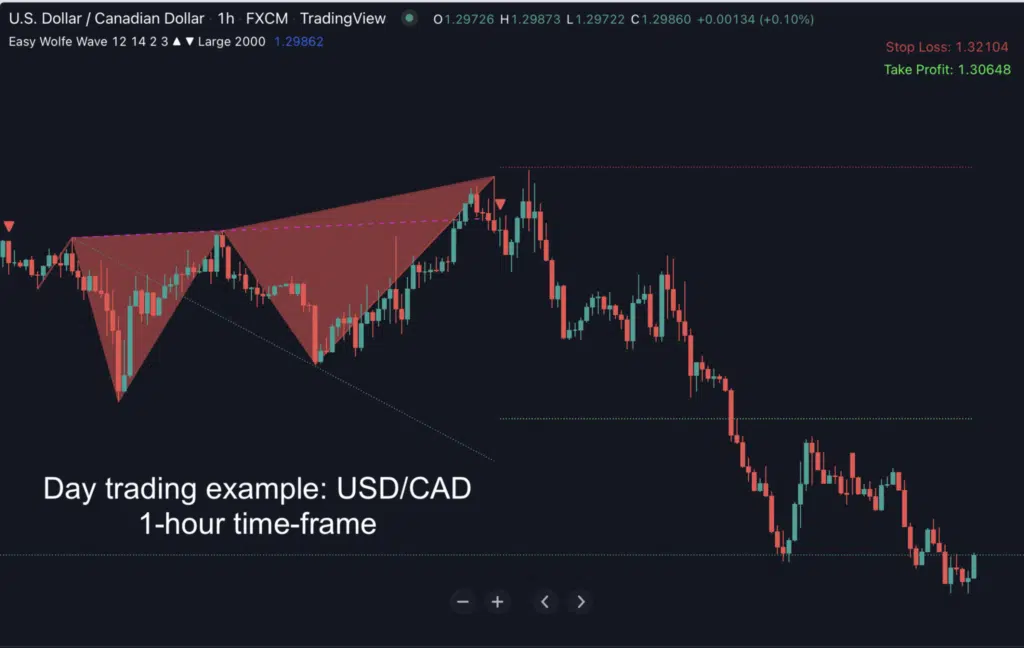
The EPA line is your primary take profit target. This is where the pattern predicts price will arrive once the reversal is in full motion. You can take full profit at the EPA, or scale out partially as price approaches it. Otherwise, Easy Wolfe Wave also suggests stop loss and take profit levels so you can secure your trade effortlessly.
#3 Let the trade run
Once you’re in, trust the setup. Minor pullbacks along the way are normal. As long as the pattern structure remains intact, the trade is still valid. Avoid the temptation to exit early and let the Wolfe Wave pattern do what it’s designed to do.
5. Start trading the Wolfe Wave pattern with precision
No more:
- Spending hours manually drawing and validating Wolfe Wave patterns only to still second-guess the setup
- Getting caught in frustrating fakeout moves that eat into your trading account
- Missing those big market reversals that the pattern is built to catch
Now’s the time to harness the power of the Easy Wolfe Wave Indicator. No more missed opportunities, no more frustration in trying to catch those elusive reversal points. Get on the trend exactly when the market shifts.