
Entering the world of forex trading for beginners can be confusing at first. The market moves quickly, terminology feels technical, and many new traders struggle to identify where to start.
This guide is designed to simplify that process. Instead of overwhelming you with complex theories, it focuses on how the forex market works, how traders are executed, and how beginners can approach trading in a structured way. You will also discover how modern tools can reduce analysis time and improve decision-making.
Table of Contents
1. What is forex trading?
Forex trading refers to the act of buying and selling currencies with the goal of profiting from changes in exchange rates.
Currencies are traded in pairs, which means you are always comparing the value of one currency against another. For example, in EUR/USD, the price reflects how much the euro is worth in terms of the US dollar.

Price movements are driven by a combination of macroeconomic factors such as interest rates, inflation, central bank policies, and overall market sentiment. While institutions participate in forex for hedging and international trade, retail traders focus on short-term and medium-term price fluctuations.
2. How forex trading works: Simple examples for beginners
Every trade in the forex market expressed a directional bias.
When a trader buys a currency pair, they expect the base currency to strengthen relative to the quote currency. Conversely, selling a pair reflects the expectation that the base currency will weaken.
For instance, buying EUR/USD implies that the euro is expected to rise against the dollar. Selling GBP/AUD suggests that the pound is expected to decline relative to the Australian dollar.
Understanding this mechanism is fundamental, because all strategies and tools are built around identifying when and where these directional moves are likely to happen.
3. Key forex trading fundamentals every beginners must know
One of the biggest challenges in forex trading for beginners is not the lack of strategies, but the lack of structure.
Markets are inherently uncertain, so consistency comes from following a defined process. This includes understanding the economic context behind a currency pair, defining entry and exit conditions before placing a trade, and evaluating past performance to refine future decisions.

3.1. Risk management: The foundation of long-term trading
Risk management plays a central role. Profitable traders are not those who win every trade, but those who control losses effectively while allowing profitable trades enough room to develop. This is why predefined stop loss and take profit levels are essential rather than optional.
3.2. Trading psychology: Avoiding emotional decisions
Another important concept is trading psychology. Emotional reactions, such as closing trades too early or holding losing positions too long, often lead to inconsistent results. A structured system helps reduce these emotional biases.
4. Popular forex trading strategies for beginners
4.1. Trend trading: Following market direction
Trend trading focuses on following the overall market direction. Traders look for confirmation that the market is moving consistently upward or downward and enter positions aligned with that trend.
4.2. Pullback trading: Entering at better prices
Pullback trading attempts to enter during temporary retracements within a trend. This approach aims to achieve better entry prices while still trading in the direction of the broader movement.
4.3. Reversal trading: Identifying market turning points
Reversal trading focuses on identifying points where the market is likely to change direction. This approach requires a deeper understanding of price behavior and key levels, making it slightly more advanced.

Regardless of the approach, successful execution depends on identifying high-probability zones rather than entering trades randomly.
5. Best trading tools for forex beginners on TradingView
A major difficulty for beginners is identifying reliable entry and exit points. Manual chart analysis can be time-consuming and often inconsistent, especially without a clear framework.
This is where powerful indicators can provide a significant advantage. Instead of guessing, traders can rely on data-driven zones that highlight where price is more likely to react.
5.1. Order Block Gen indicator: Identify institutional reversal zones
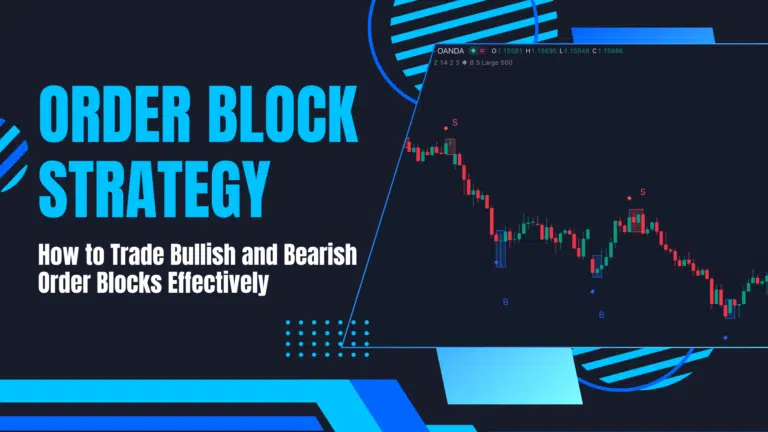
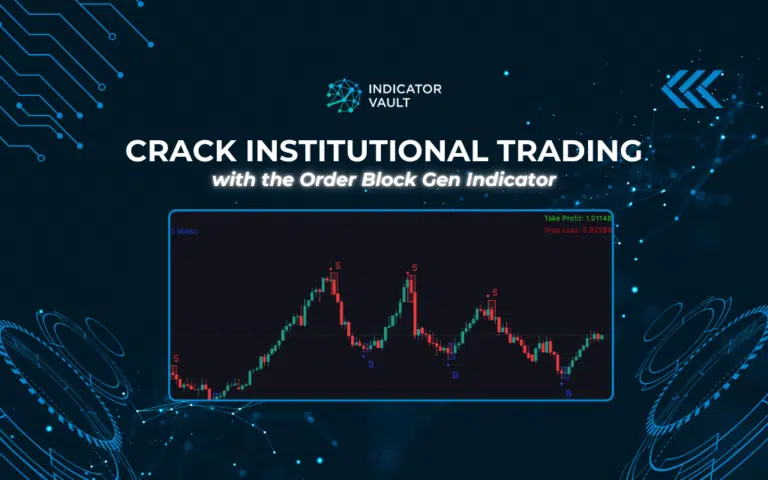
Order Block Gen indicator is designed to identify institutional order blocks, which represent areas where large market participants have placed significant buy or sell orders.
What are institutional order blocks?
These zones are important because they often act as turning points in the market. Price tends to revisit them and react strongly due to the concentration of liquidity.

How to use Order Block Gen in forex trading
The indicator continuously scans multiple currency pairs and timeframes, allowing traders to see potential reversal zones in real time. This removes much of the subjectivity involved in manual analysis.
In practical terms, traders can use order blocks in two main ways. The first is to follow the initial formation of an order block, which may signal the beginning of a new directional move. The second is to wait for price to return to the zone and look for rejection, which often provides a more precise entry.
5.2. Supply Demand PRO indicator: Automatically find key price zones
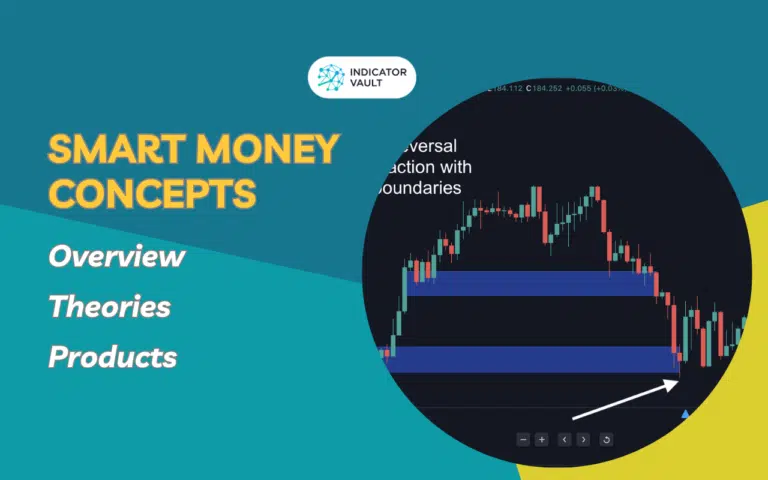
Supply Demand PRO for TradingView focuses on automatically detecting strong supply and demand zones, which are areas where price imbalances occur.
Why supply and demand zones work so well
These zones differ from traditional support and resistance because they often anticipate price movement rather than simply react to it. In many cases, price is drawn toward these areas before reversing, making them highly relevant for reversal-based strategies.
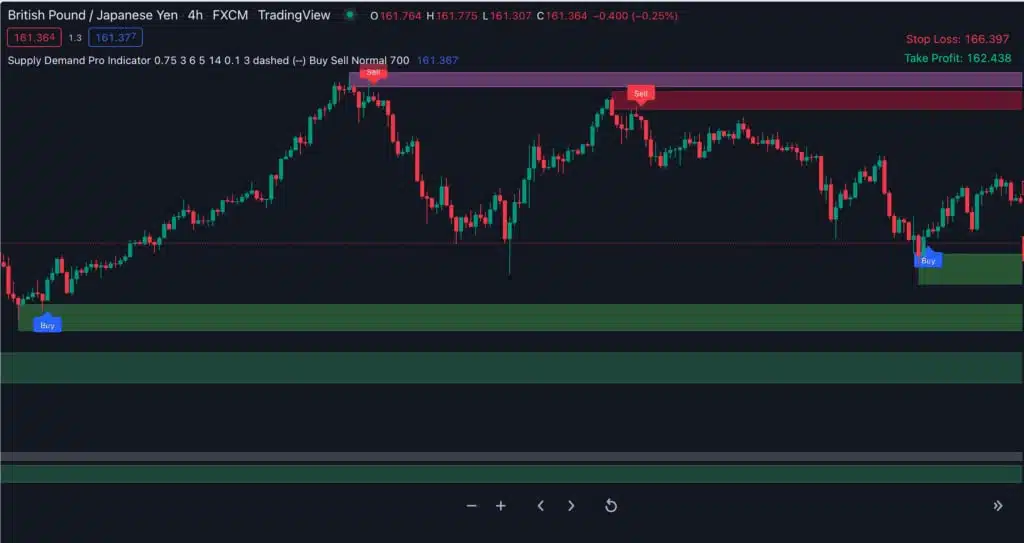
How Supply Demand PRO simplifies chart analysis
The indicator simplifies what is traditionally a complex and manual process. Instead of drawing zones by hand, traders can instantly visualize high-probability areas directly on the chart.
When price approaches a demand zone, it is more likely to move upward due to increased buying pressure. Conversely, when price reaches a supply zone, selling pressure often causes it to move downward.
Click here to explore more about Supply Demand PRO indicator
5.3 Why these forex trading tools matter for beginners
Many beginners struggle not because they lack effort, but because they lack clarity. Entering trades without a clear framework often leads to inconsistent outcomes.
By highlighting key price zones, tools like Order Block Gen and Supply Demand PRO help traders focus on high-probability setups. They reduce noise, improve timing, and support a more disciplined trading approach.
Instead of constantly searching for signals, traders can rely on a structured system that aligns with how the market actually behaves.
6. Final thoughts
Learning forex trading for beginners is not about finding a perfect strategy, but about building a repeatable process.
A solid foundation includes understanding how currency pairs move, applying consistent risk management, and using tools that simplify market analysis. With the right approach, trading becomes less about guessing and more about executing well-defined setups.
As the forex market continues to evolve, traders who combine knowledge with the right tools will be better positioned to navigate it with confidence and consistency.