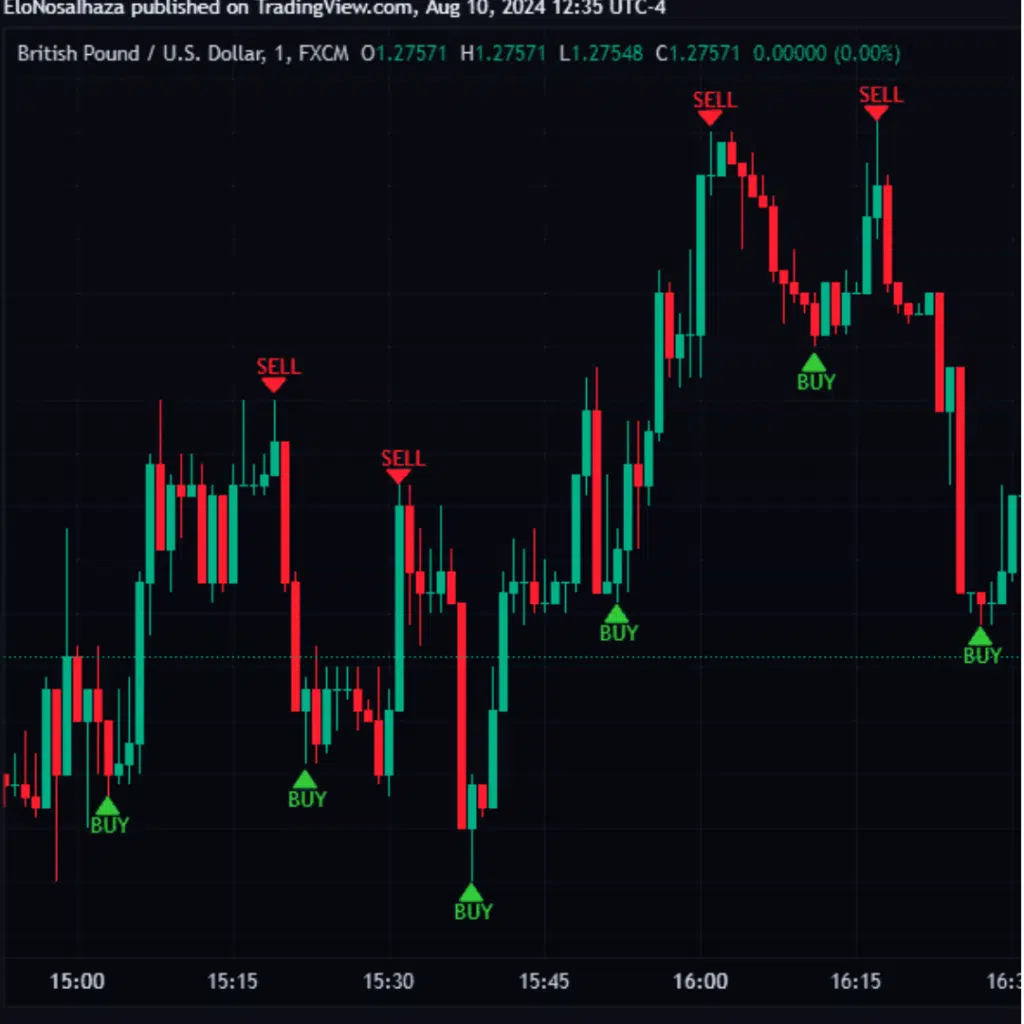

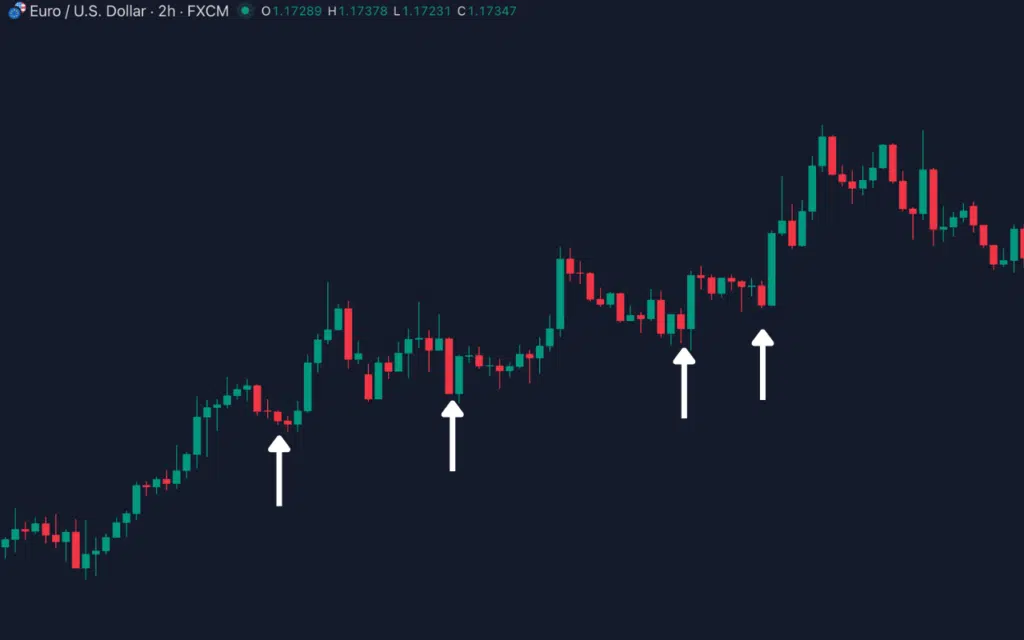
Scalping trading is a fast-paced intraday approach focused on capturing small price movements multiple times per session. This complete guide explains how it works, explores breakout, momentum, range, and pullback techniques, and shows how to build a structured, high-probability strategy with the right tools.
Scalping trading is a rapid intraday trading style focused on capturing small price movements repeatedly throughout the session. Instead of holding positions for hours or days, traders practicing scalping trading aim to enter and exit within minutes, stacking multiple small gains into consistent profits.
Because of its speed and precision requirements, scalping demands accurate trade signals, strict discipline, and a structured system. Most professional scalpers rely on specialized intraday trading indicators rather than discretionary guesswork.
Scalping trading works by exploiting short-term price inefficiencies created by order flow shifts, liquidity imbalances, and intraday volatility.
Markets constantly rotate between expansion and consolidation phases. Scalping capitalizes on these micro-movements before price stabilizes again.
Two critical components determine success:
Precise entry signals
Strong noise filtering
Without structure, scalping trading quickly becomes random and emotionally exhausting.
There are several approaches within scalping, depending on how traders interpret short-term price behavior.
Breakout-based scalping focuses on entering immediately when price breaks above resistance or below support with momentum.
These trades aim to capture the initial expansion phase after consolidation. The key challenge is filtering false breakouts – one of the biggest risks in intraday environments.
Momentum-driven scalping targets strong directional acceleration.
Traders look for continuation setups once momentum confirms. This works best in clean trending sessions with minimal whipsaw.
Range-based scalping trading applies when markets move sideways.
Traders repeatedly buy near support and sell near resistance inside defined boundaries. Discipline is crucial to avoid getting trapped when the range breaks.
Pullback-style scalping trading involves entering after a temporary retracement within an established trend.
Instead of chasing price, traders wait for minor corrections and enter in the direction of the dominant intraday trend, often achieving favorable risk-to-reward ratios.
This quick trade offers unique advantages, but it also comes with specific challenges.
Because of these dynamics, structured tools are essential for consistent scalping trading performance.
This is where Logic Day Trading truly shines.
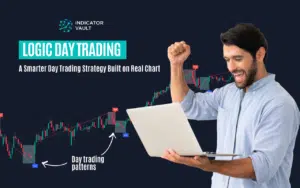
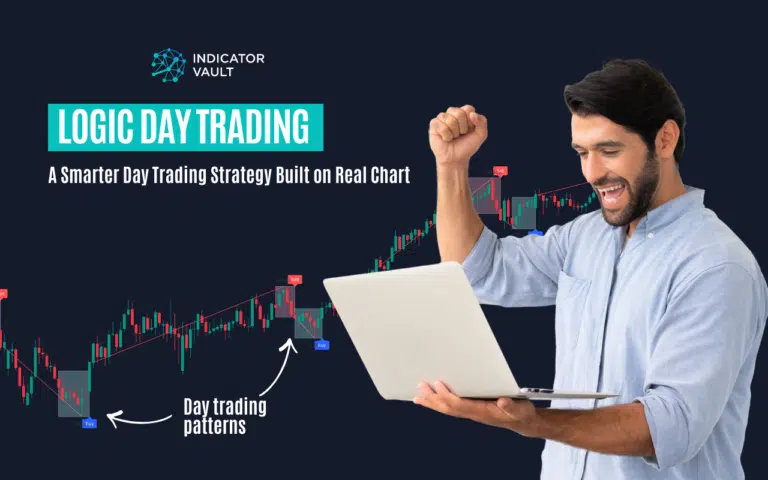
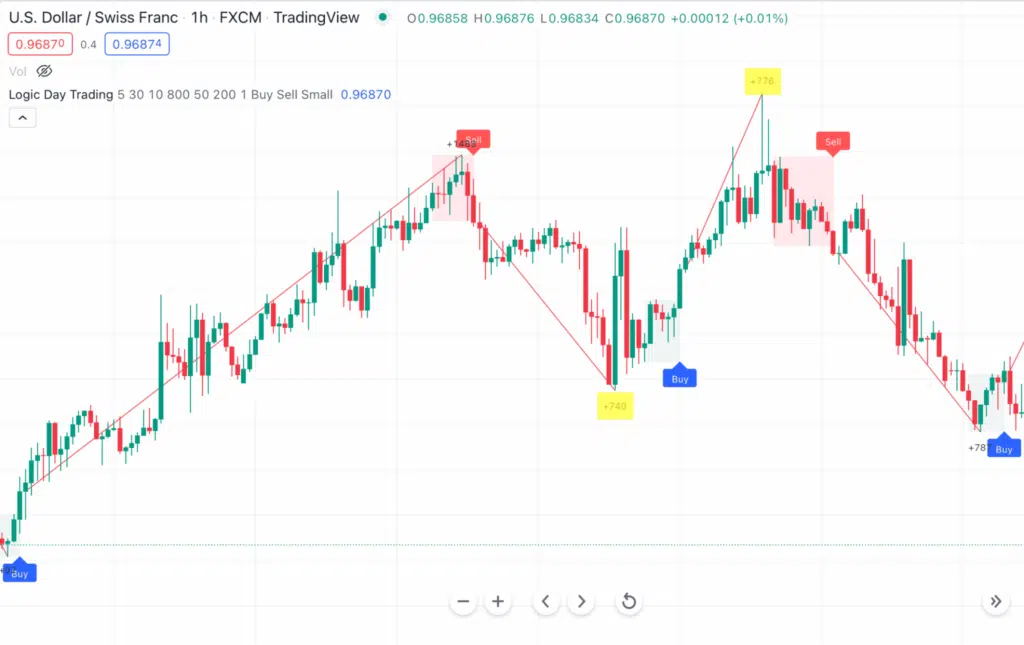
Built specifically for intraday traders, this professional-grade indicator enhances scalping trading by identifying high-probability setups using structured price logic rather than lagging signals.
Logic Day Trading works exceptionally well on 30-minute and 1-hour charts, where it filters out noise and focuses only on meaningful price patterns.
It helps traders identify breakout scalps, momentum continuation trades, pullback entries, and even potential tops and bottoms, without cluttering the chart or overwhelming the trader.
Unlike many traditional intraday trading indicators, Logic Day Trading:
For traders serious about improving scalping trading, this structured framework simplifies decision-making and improves consistency.
Scalping trading is one of the most demanding yet rewarding intraday styles when executed with discipline and structure.
Without a rule-based system, scalping becomes chaotic. With proper tools and strategy, however, it transforms into a repeatable, professional approach.
Logic Day Trading for Tradingview was built for traders who want clarity, speed, and accuracy. By focusing on high-probability price behavior instead of lagging signals, it helps scalpers identify better entries, reduce noise, and trade with confidence across different market conditions.
If you are serious about this trading style and want a professional-grade edge on Tradingview, this indicator is the tool designed to help you execute smarter, faster, and more consistently, one trade at a time.