
MACD Strategy: How to trade bullish and bearish trends effectively



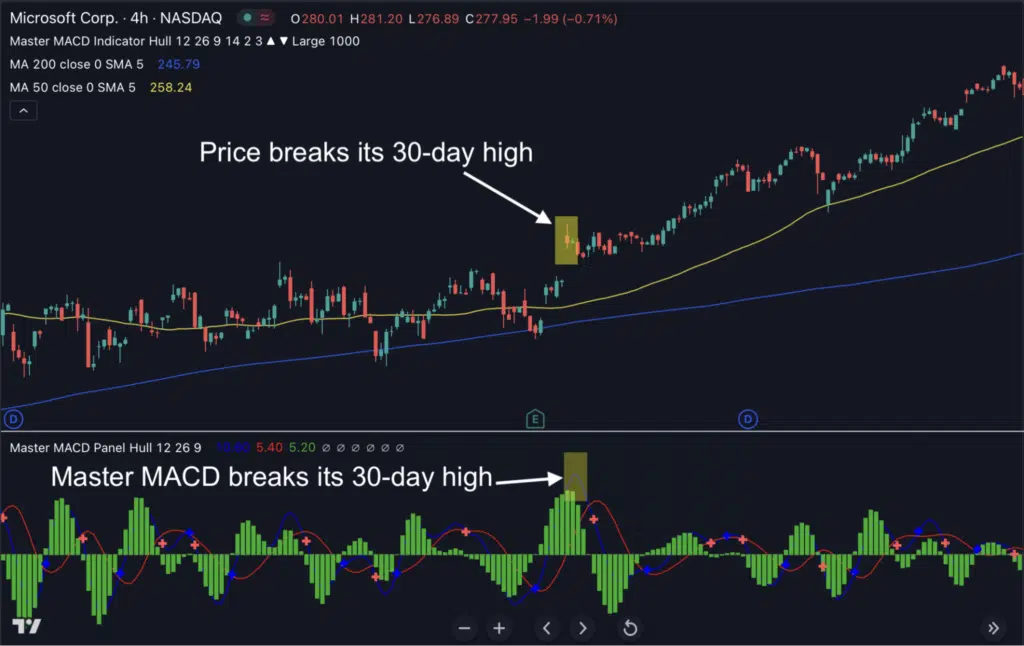

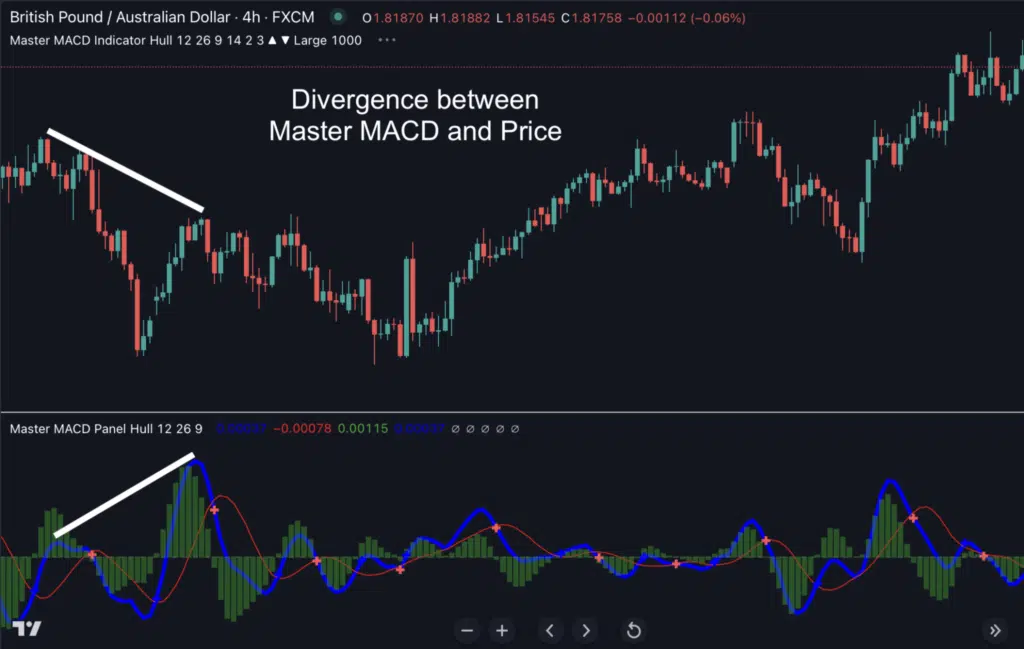

Understanding the MACD strategy can significantly improve how you read market momentum and identify high-probability trade setups.
In this guide, you’ll learn what the MACD is, how bullish and bearish signals work, and how to apply divergence and trend-following techniques in a structured trading strategy.
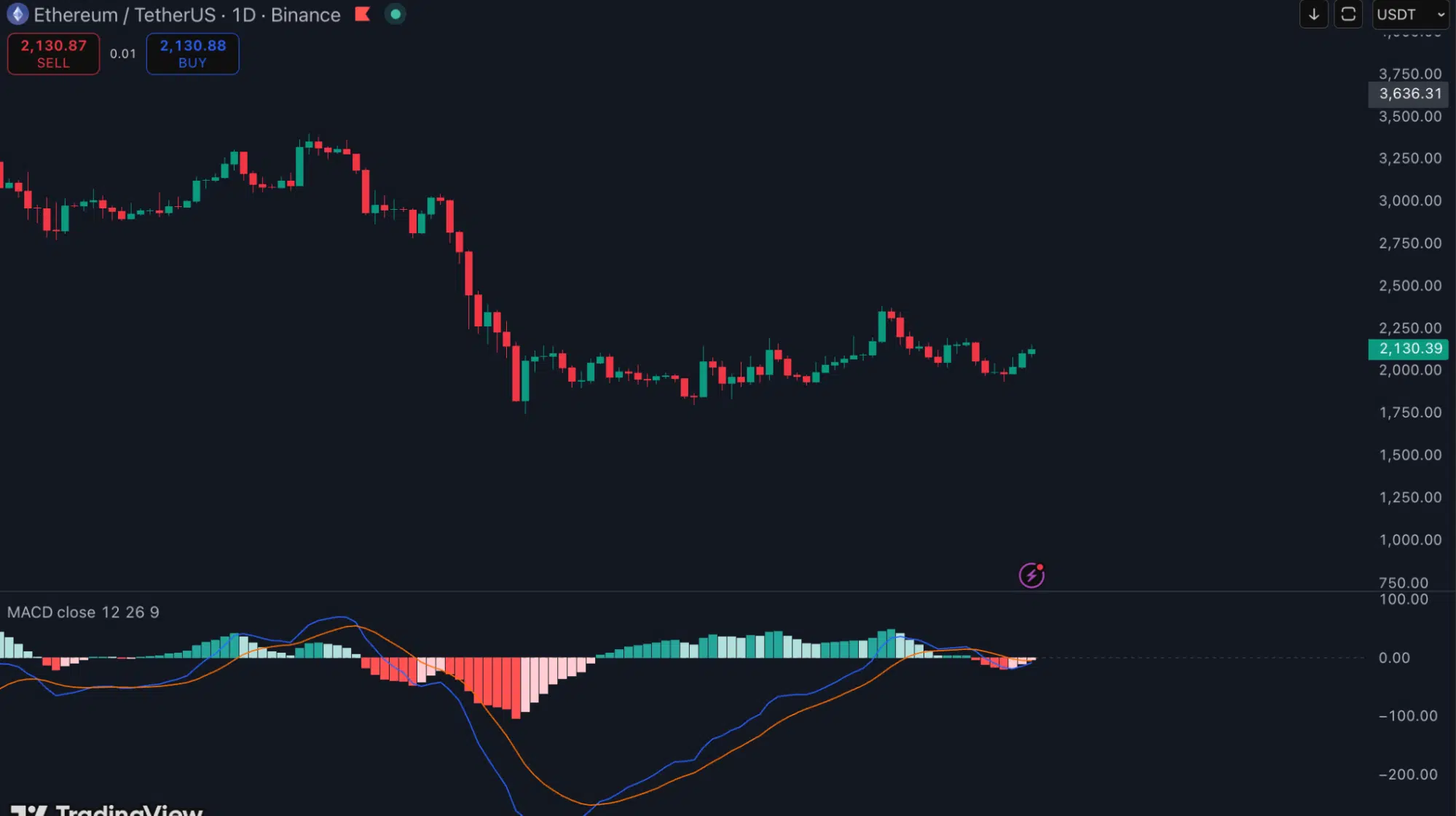
The MACD is a momentum oscillator that tracks the relationship between two moving averages of an asset’s price. It acts as a trend-following heartbeat, showing traders whether the current momentum is accelerating or fading.
Unlike simple moving averages, the MACD provides a faster look at price changes, making it more aligned with how active markets move. Because it measures the distance between averages, it highlights convergence (slowing momentum) and divergence (increasing momentum) before they are obvious on the price chart.
To master a MACD strategy, you must distinguish between bullish and bearish momentum shifts to apply the concept correctly.
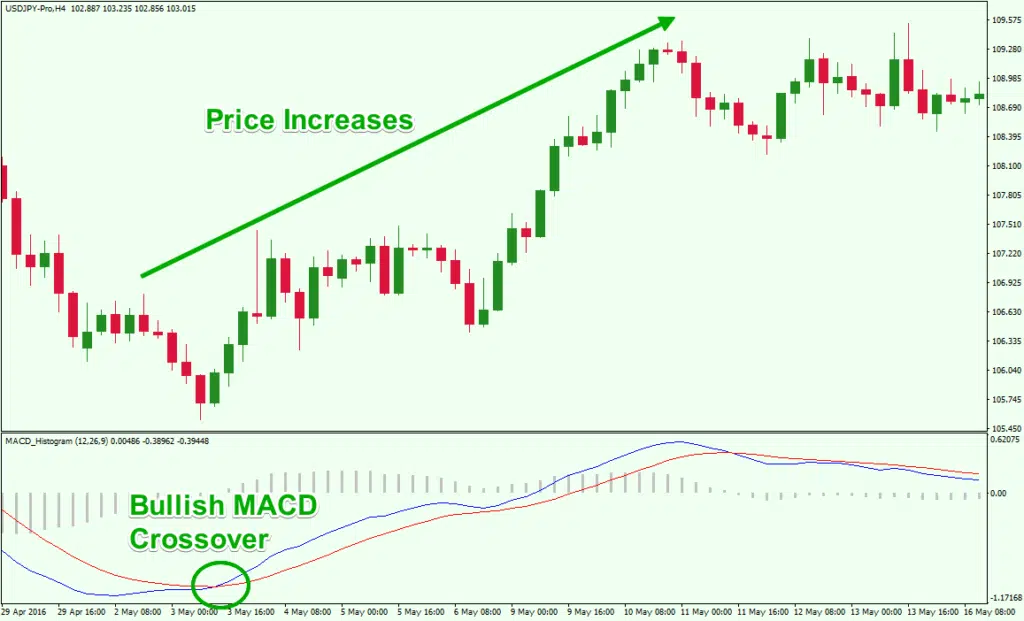
A bullish signal forms when the MACD line crosses above the signal line, typically below the zero level. This indicates that buying pressure is accelerating and a new uptrend may be starting.
Traders use this for trend trading entries, looking for price to move upward as the histogram bars grow taller above the zero line. This is often the “accumulation” phase where smart money begins to push prices higher.
A bearish signal forms when the MACD line crosses below the signal line, often after an extended move up. This indicates that selling pressure is taking over and the previous trend is losing steam.
When the MACD stays below the signal line and the zero level, it confirms a bearish environment. These zones are commonly used to identify short-selling opportunities or to exit long positions before a major drop.
The most common way to leverage the MACD is the crossover between the MACD line and its nine-day EMA (the Signal Line).
This strategy focuses on the center of the indicator to confirm a full trend flip.
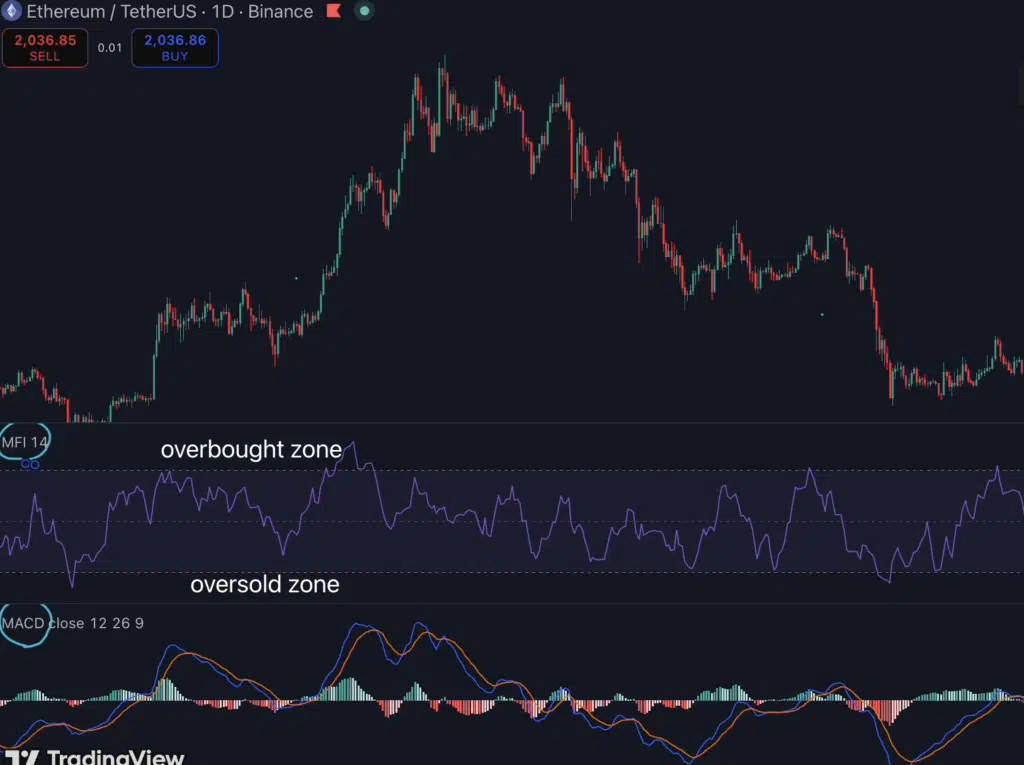
The MFI uses both price and trading volume to identify overbought or oversold conditions.
Professional traders often combine these three distinct tools to gain a 360-degree view of the market. This combination allows you to see the past, present, and potential future of a trend.
| Indicator | Primary Role | Strategic Value |
|---|---|---|
|
MACD
|
Momentum Heartbeat
|
Identifies the strength and direction of the current trend.
|
|
RSI |
Future Projection
|
Pinpoints overbought/oversold levels to predict where a reversal might occur. |
|
SMA |
Trend Filter |
Acts as a lagging “anchor” to confirm if the overall trend is still intact.
|
Here’s how to use the trio:
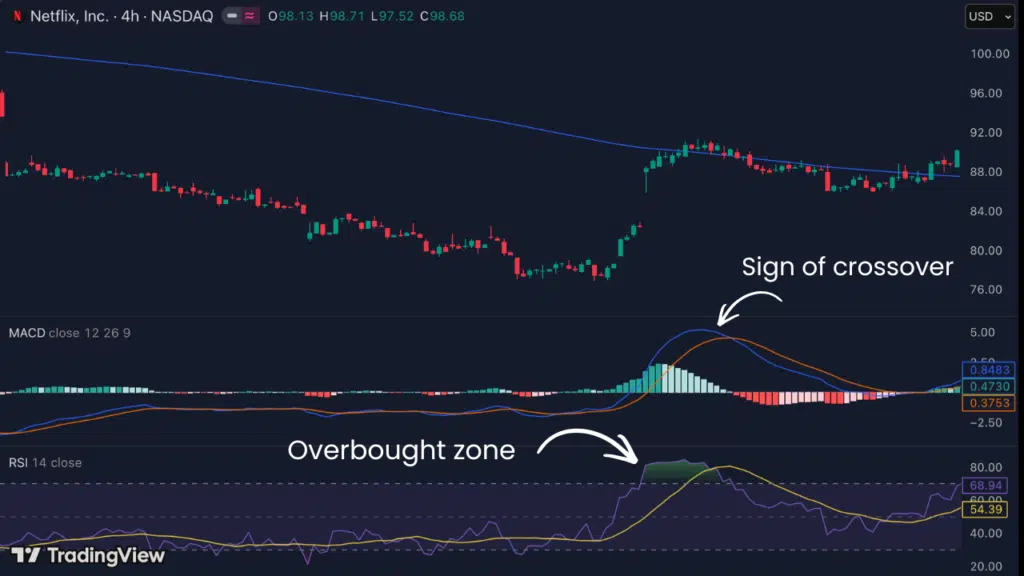
Step 1: Use the RSI (typically set to 14 periods) to see if the market is overextended. If RSI is at 80, be wary of buying, even if the MACD is bullish.
Step 2: Wait for the MACD to show a crossover to signal that momentum is officially shifting.
Step 3: Use the SMA (like a 50 or 200-period) to ensure you aren’t trading against the big picture. Only take long MACD signals if the price is also above the SMA.
There are lots of advantages that traders love, one of them is that the MACD strategies provides objective, visual triggers:
However, we need to mention of some the limitations that traders should not ignore
Inherent Lag: As a moving-average-based tool, the MACD is a lagging indicator that reflects past price action. This can result in crossovers occurring after a significant portion of the move has already passed, potentially leading to late entries.
Overbought/Oversold Ambiguity: Unlike the RSI, the MACD lacks absolute limits (e.g., 0 to 100). This makes it difficult to pinpoint “true” overextended levels, as a high reading may simply indicate a strong trend rather than an imminent reversal.
False Divergences: In aggressive trends, the MACD can signal bearish divergence multiple times while the price continues to climb. Relying solely on these signals without further confirmation can lead to trading against a powerful market move.
The Master MACD for TradingView (or MT4/NT8) is designed to eliminate the lag and noise of the standard version. It highlights divergence automatically and identifies high-probability breakout zones in real time.
The upgraded tool detects institutional momentum by filtering out minor price fluctuations. Once a valid trend or divergence is identified, it is displayed directly on the chart, allowing you to focus on execution rather than manual calculation.
The main strength of this professional tool lies in its actionable insights. It helps traders:
Whether you are a day trader looking for quick scalps or a swing trader following long-term trends, a structured MACD strategy provides the clarity needed to trade with confidence.
Ready to move beyond basic indicators? Check out the Master MACD indicator here.
Mastering the MACD strategy gives you a clearer view of the market’s internal momentum. By understanding how to read crossovers, breakouts, and divergence, you can plan trades with greater precision and avoid being caught on the wrong side of a trend.
While basic indicators can be a starting point, professional-grade tools like Master MACD make it easier to apply these concepts consistently and profitably.

Successful forex trading relies on the ability to read and interpret the market accurately. One vital aspect of this process is recognizing chart patterns, which can reveal essential information about market trends and potential trading opportunities. In this blog post, we will discuss the significance of chart patterns in trading and introduce some of the…
Discover 5 essential trend indicators and how they can elevate your trading performance. This guide explains how professional traders use powerful trend indicators to identify direction, confirm momentum, and improve entry and exit timing. Table of Contents Successful trend trading relies on your ability to identify and follow market direction accurately. Trend indicators are technical…

Learn how to trade Wolfe Waves without the manual drawing headache. Discover the geometric sweet spot that predicts reversals and how to let Easy Wolfe Wave do the math for you. Table of Contents 1. Introduction A first look of bullish & bearish wolfe waves Most traders struggle because they treat the market like a…
In the right hands, Moving Averages can be a formidable tool, ready to shake up any market. You’re missing a lot if you aren’t using them for your trades! Table of Contents 1. Introduction In the right hands, Moving Averages can be a formidable tool, ready to shake up any market. The lines are so…
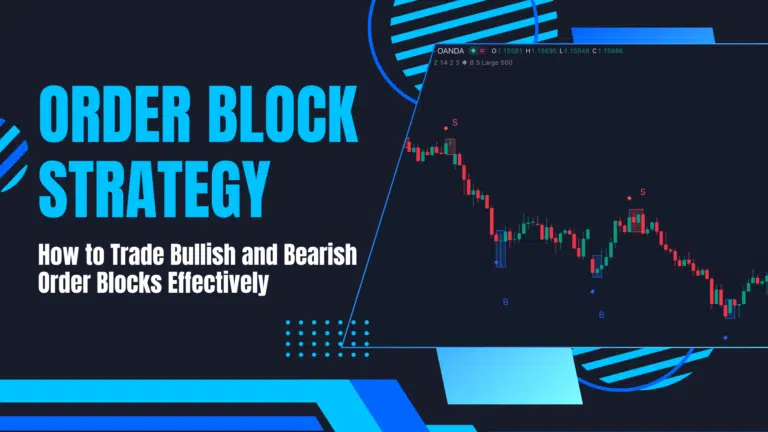
Understanding order block concepts can significantly improve how you read price action and identify high-probability trade setups. Instead of relying on lagging indicators, many professional traders focus on areas where institutional money enters the market. These areas known as order blocks often explain why price reverses, consolidates, or accelerates. In this guide, you’ll learn what…

In the world of fast-paced markets, two strategies dominate the conversation: scalping and day trading. While both involve closing positions before the market bells ring, they require very different mindsets, tools, and execution speeds. Understanding the nuances of scalping vs day trading is essential for any trader looking to master the lower timeframes. Table of…