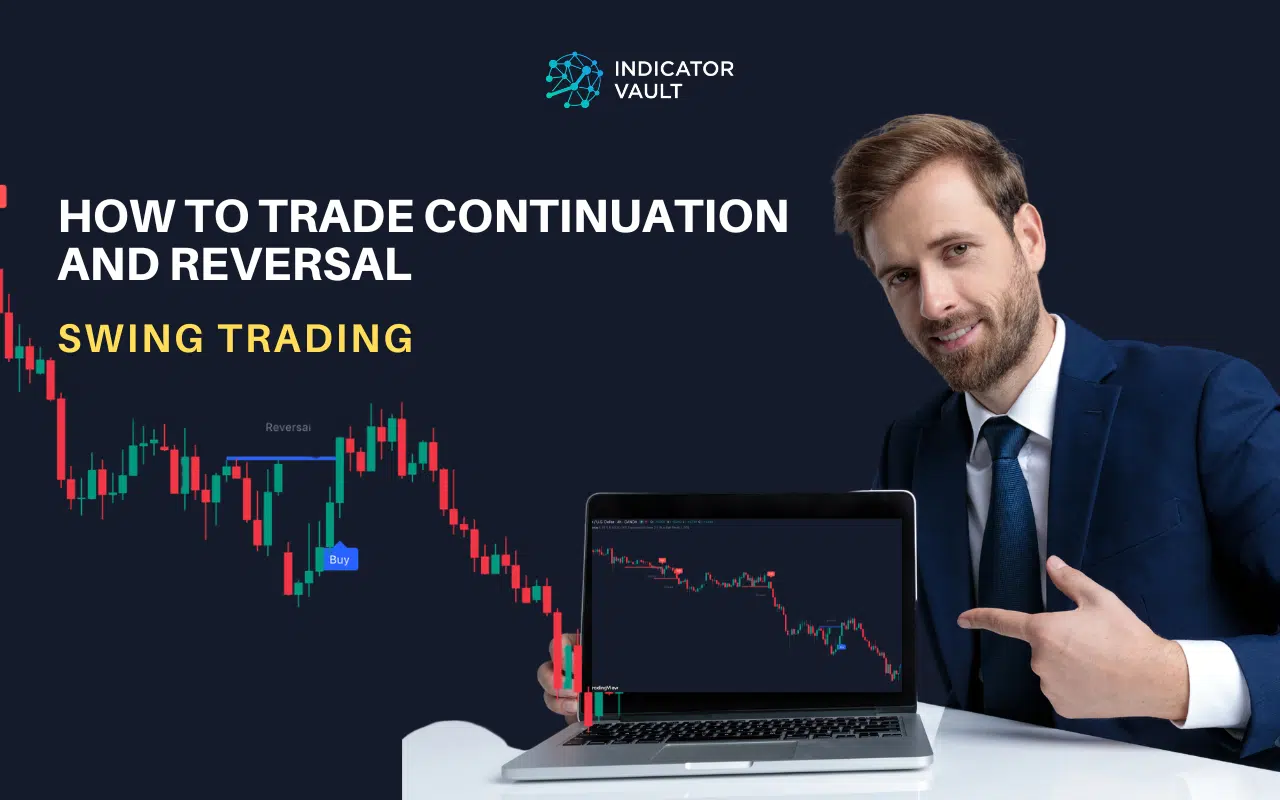
Mastering the swing trading strategy boosts your confidence in any market, and the Swing Force indicator makes it even easier with its advanced algorithm. Dive in and trade like a pro.
Table of Contents
1. Introduction
Every trader has faced this moment.
You see a move starting, but hesitate. By the time you enter, the price has already moved. Or worse, you enter too early and get caught on the wrong side.
That’s where swing trading becomes powerful.
A well-structured swing trading strategy allows you to capture meaningful market moves without constantly chasing price. But to do that effectively, you need to understand one key thing: when the market is likely to continue its trend, and when it’s about to reverse.
2. What is swing trading?
Swing trading is a trading style focused on capturing price movements over several days or weeks.
Instead of reacting to every small fluctuation, swing traders aim to ride larger price swings within a trend. The goal is simple: enter at a favorable point and exit before the momentum fades.
Because of this, swing trading sits between day trading and long-term investing. It offers more flexibility while allowing traders to take advantage of structured market movements.
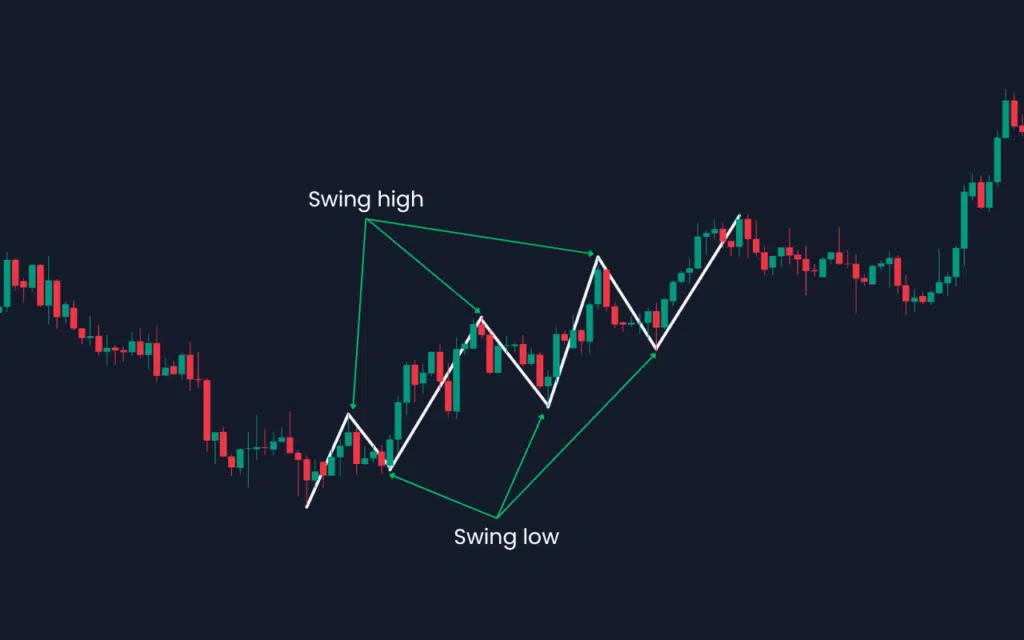
3. The important premise of swing trading
Every effective swing trading strategy begins with understanding the market direction.
Before thinking about entries, traders must first identify whether the market is trending upward, downward, or moving sideways. Without this foundation, even the best setups can fail.
From there, swing trading resolves around two key concepts: trend continuation and trend reversal
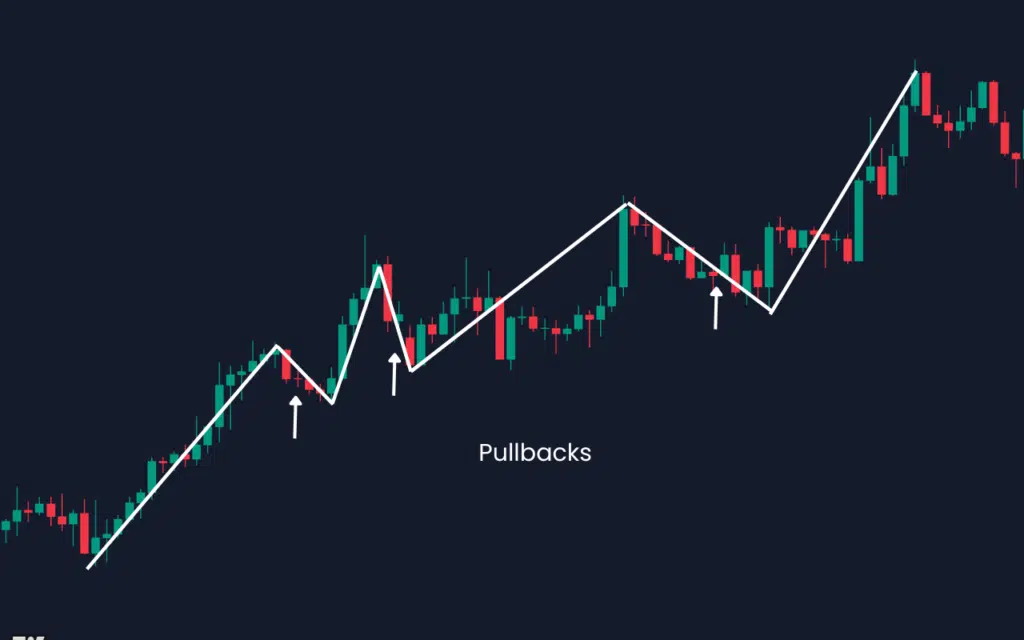
In continuation setups, traders enter during temporary pullbacks, expecting the trend to resume. In reversal setups, traders look for signs that the current trend is losing strength and a new one is about to begin.
The challenge is that these two situations can look very similar in real time. That’s why clarity and confirmation are essential.
4. Most common strategies of swing trading
Swing traders typically rely on a few core strategies to navigate the market.
4.1. Breakout trading
Breakout trading focuses on moments when price moves beyond key levels such as support or resistance.
When a breakout occurs, it often signals strong momentum and the possibility of a new trend forming. This makes it a popular approach for capturing early stages of trend continuation.
However, not all breakouts are reliable. False breakouts can trap traders, especially when the move lacks strong momentum.

4.2. Trend trading
Trend trading takes a more patient approach.
Instead of entering at breakout points, traders wait for price to pull back within an existing trend. This allows them to enter at a better price and align with the dominant market condition.
This strategy is widely used because it focuses on trend continuation , which tends to offer more consistent opportunities. However, timing the end of a pullback is not always easy.
5. The pros and cons of swing trading
Before choosing any swing trading strategy, it helps to understand both the benefits and the trade-offs. Swing trading can offer a balanced way to approach the market, but it also comes with risks that traders need to manage carefully.
| Feature | Pros of Swing Trading | Cons of Swing Trading |
|---|---|---|
| Potential Returns | Can capture larger price moves than short-term trading, which gives traders better profit potential from one setup. | Returns are not guaranteed, especially if the move ends earlier than expected or turns into a false setup. |
| Stress Level | Less stressful than day trading because traders do not need to monitor the market constantly. | Can still be stressful when positions are held through uncertainty or sudden market changes. |
| Volatility Exposure | Allows traders to benefit from medium-term market swings and structured price movement. | Exposes traders to overnight risk and unexpected market reversals caused by news or volatility spikes. |
| Time Commitment | Requires less screen time and gives traders more time to analyze setups carefully. | Still requires regular review and patience, especially when waiting for confirmation or managing open trades. |
| Capital Requirement | Usually does not require the same speed or high-frequency execution as short-term trading, which can make it more flexible. | Traders still need enough capital to manage overnight positions and withstand temporary drawdowns. |
| Holding Period | Gives traders enough time to let a setup develop and capture a meaningful trend continuation or trend reversal move. | Holding trades for several days or weeks increases exposure to changing market conditions and external risks. |
Swing trading also requires patience. Traders may need to wait for setups to fully develop, and that can be frustrating in fast-moving markets.
Most importantly, one of the hardest parts of any swing trading strategy is knowing whether a move is a trend continuation or a trend reversal. This is where many traders struggle. A market pullback can look like a great opportunity to join the trend, only to turn into a reversal. On the other hand, what looks like an early reversal may simply be a temporary pause before the original trend resumes.
That challenge is exactly why better clarity matters so much. And that is where the right tool can make a real difference.
6. Catch Better Swing Trading Setups with Swing Force indicator
Even experienced traders struggle with conflicting signals.
Using multiple indicators often creates more confusion instead of clarity. This is where Swing Force offers a different approach.
Instead of relying on separate tools, Swing Force combines momentum shifts, breakout conditions, and trend direction into a single, unified system. This helps traders focus on high-probability setups without over complicating their analysis.
6.1. In trend continuation
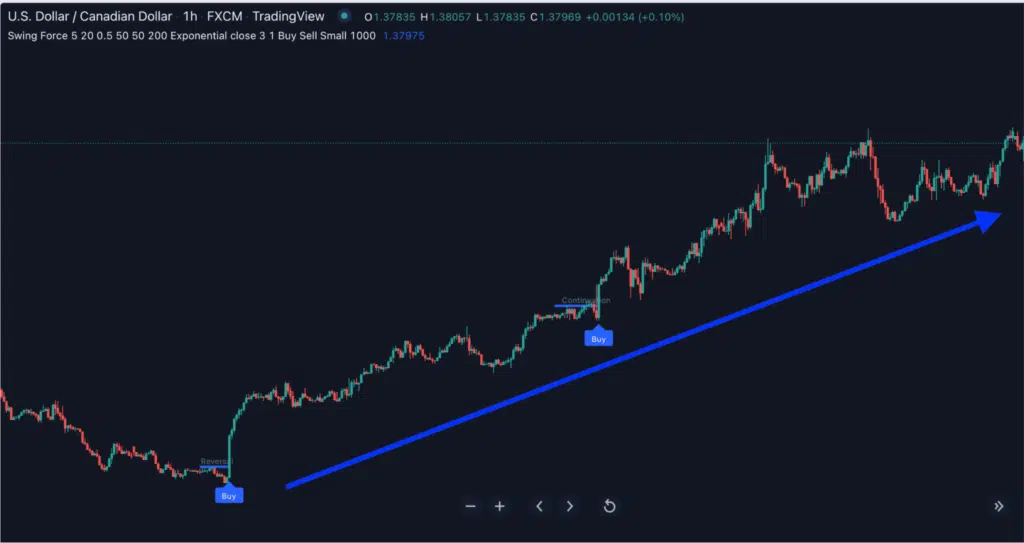
In trending markets, Swing Force for Tradingview helps traders stay aligned with the dominant direction.
It highlights areas where the trend is likely to continue after a temporary pause. This allows traders to enter during pullbacks with more confidence, rather than guessing when the move will resume.
By focusing on trend continuation, traders can take advantage of more stable and repeatable setups.
6.2. In trend reversal
Swing Force also helps identify early signs of trend reversal.
By analyzing changes in momentum and price behavior, the indicator can signal when the current trend is weakening. This gives traders the opportunity to prepare for a shift in direction before it becomes obvious to the broader market.
Instead of reacting late, traders can anticipate potential turning points with greater clarity.

7. The bottom line
A successful swing trading strategy is built on understanding how trends form, continue, and eventually reverse.
By focusing on both trend continuation and trend reversal, traders can avoid chasing price and instead position themselves ahead of key market moves.
While traditional strategies still work, tools like Swing Force simplify the process by combining multiple signals into one clear system.
In the end, better decisions come from better clarity, and that’s exactly what swing trading requires